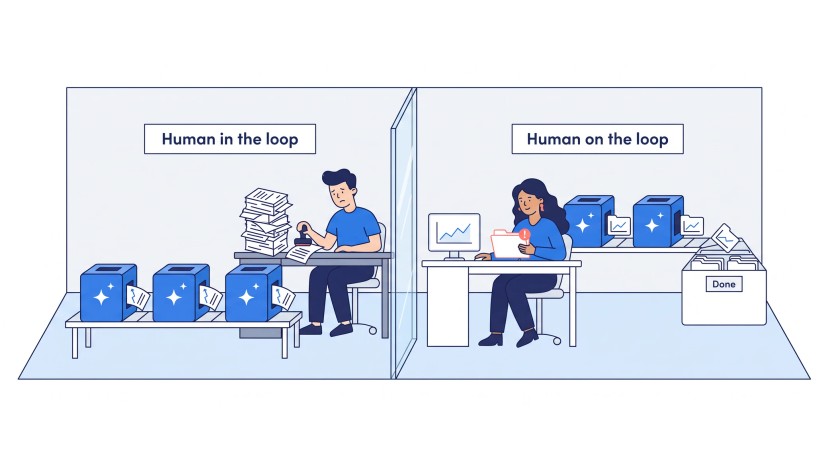
I kept seeing the word “guardrails” pop up in AI articles — usually described as filters, safety layers, or limitations to prevent AI from going off the rails. It made sense at first, but something started to feel off. Over the past year, my work has shifted dramatically toward tailoring general-purpose models instead of building custom ones. And in that context, the old definition of guardrails felt limiting. What we needed wasn’t just protection — we needed precision guidance. That realization led me to rethink how we define and implement guardrails in modern AI systems.
Guardrails as Barriers: The Traditional View
In most organizations, guardrails have historically meant hard constraints. These are critical mechanisms that prevent undesirable outcomes, ensure compliance, and block dangerous behavior. They work like the concrete barriers on a highway — effective, but inflexible.

Examples of hard constraint implementations include:
- Prompt filtering and moderation tools
- Output blacklists or pattern-based censorship
- Code-level safety checks and static rules
- Permission gating and access controls
- API rate-limiting and usage quotas
- Regulatory enforcement tools like PII masking or redaction
A Broader View: Guardrails as Guides
But what if guardrails weren’t just about blocking? What if they also helped direct the system toward better outcomes? Just like road signs, lane markers, or GPS suggestions, soft guides don’t prevent motion — they shape it. These approaches allow us to work with AI more fluidly, especially when tailoring general-purpose systems.

Examples of soft guide implementations include:
- Role and goal prompts to establish behavioral intent
- System-level instructions and contextual scaffolding
- Reinforcement learning from user feedback and corrections
- Re-ranking outputs based on semantic alignment or confidence
- Semantic tokens, tone shaping, and behavioral style templates
Why It Matters: Tailoring Becomes the New Normal
The shift toward using general-purpose models means fewer teams are building from scratch — and more are adapting what’s already available. This creates new demands: instead of focusing solely on model performance, teams now need mechanisms to shape behavior in-context. Traditional constraints alone can’t meet this challenge. To adapt AI reliably, we need a wider spectrum of control tools — both hard and soft — to tailor outputs without sacrificing flexibility, nuance, or velocity.
Tailoring with Confidence: Using Both Hard Barriers and Soft Guides

The future of scalable AI lies in combining hard barriers with soft guides. Constraints ensure safety and compliance; guides provide adaptability and alignment. Together, they form a resilient and responsive system capable of handling edge cases while staying directionally on course. For AI leaders, architects, and managers, adopting this blended mindset is key to unlocking AI’s potential without compromising control. Guardrails are no longer just what keeps the AI in bounds — they’re also how we help it reach the right destination.