
We capture the instructions, knowledge and outputs behind repeated work and package them as Claude Skills, Copilot agents or custom GPTs. Your team can then hand the work to AI without rebuilding it each time.
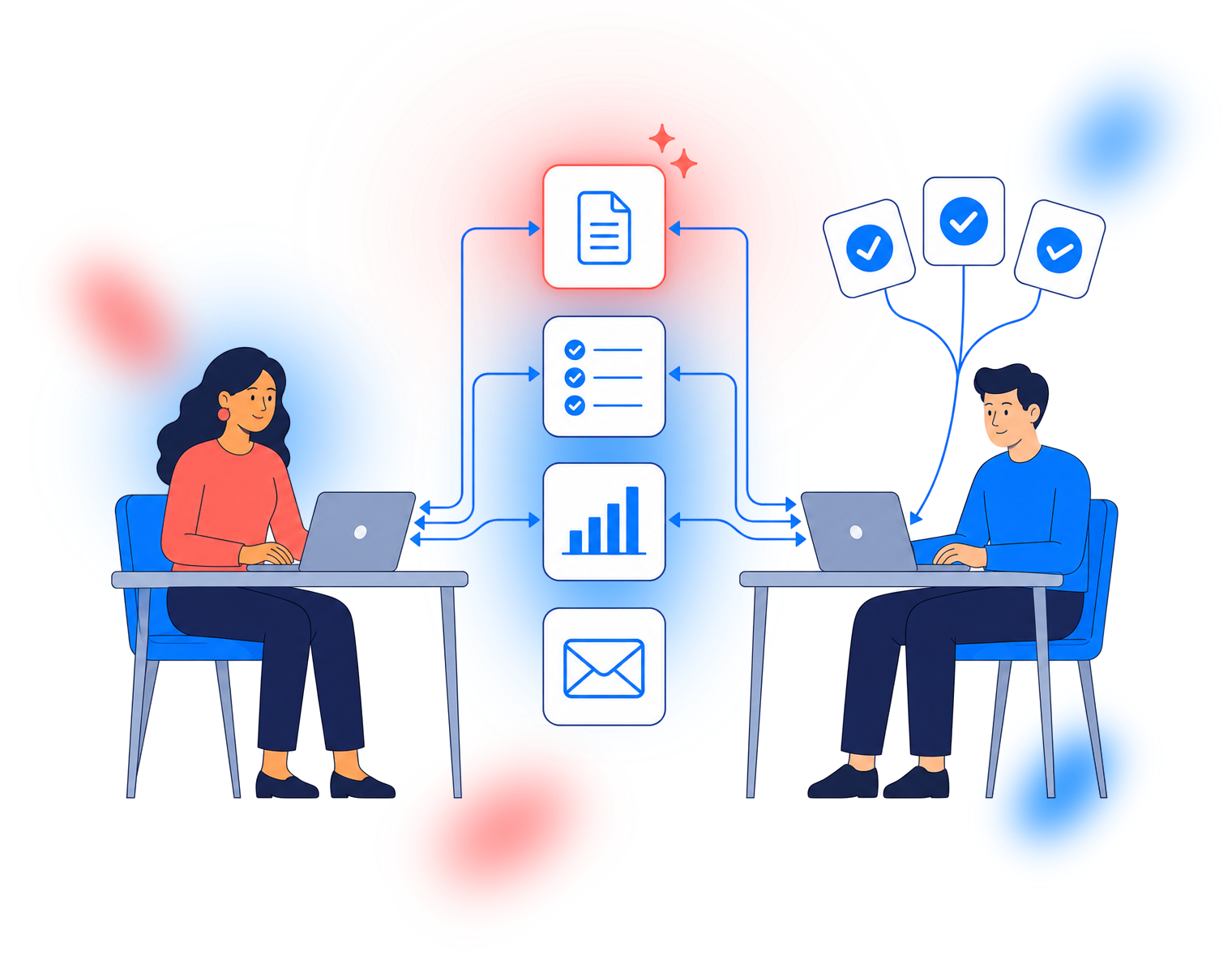
Your teams may already use AI a lot, but recurring work still takes too much manual setup and individual effort.
Recurring work shouldn't have to be rebuilt every time someone does it. We capture how successful AI-assisted work is actually done and package it into reusable AI skills and assistants. The instructions, knowledge, inputs, expected outputs and boundaries are defined once, and your people call on the capability whenever the work comes up.
We take recurring work your people already do, or work that suits AI assistance well, and turn it into structured AI execution. Each result is a reusable capability built around a specific type of business work, unlike a generic chatbot.
Reusable AI capabilities for selected tasks and recurring work. Each one can define its inputs, instructions, relevant knowledge, expected outputs and boundaries, and where a person has to step in with input or judgment. Your people don't have to learn how to rebuild the work: the way of doing it is part of the capability.
For larger recurring work packages, we build custom AI assistants configured around the work they have to produce. They hold the business and process context the work needs and steer it toward a defined result: documents, analyses, recommendations, communications and other structured business outputs.
We capture what successful execution needs. What information must be at hand? Which instructions apply? What business or process knowledge matters? What should the final work product contain? Which decisions stay with the person? Where does the capability's job end? Informal AI know-how becomes repeatable execution.
The capability also has to be practical for the people who will use it. We show which capability to use and when, what information to give it, what result to expect and where a person's review or judgment still matters. Representative examples and a handover to the team make it usable beyond the person who helped create it.
The idea is simple: capture successful execution once and reuse it whenever the same type of work comes up again.
It's for organizations whose teams already use AI for recurring knowledge work, while the results still depend on individual prompting and repeated setup. It suits companies that want to turn proven ways of working into reusable capabilities and keep people in charge of the broader workflow.
If the workflow behind the work is still unclear, start with AI Process Reengineering.
Each user builds the execution. Employees get access to an AI tool and are asked to learn prompting. Everyone develops their own methods and recreates instructions and context for every new task. Good results depend on individual experience, and AI productivity grows unevenly across the organization.
The execution is built into the capability. We start with the recurring business work and capture the pattern that produces a good result: its inputs, instructions, knowledge, outputs and boundaries. That pattern becomes a reusable skill or producing assistant, tested against representative work and handed to the team. Employees no longer need to be experts in prompting. They need to understand the work, give the required input and apply the judgment that stays theirs.
Find the recurring tasks and work products where people keep doing the same or similar AI-assisted work. Focus on work that repeats often enough to pay back a reusable capability.
Define what successful execution requires: the inputs, instructions, knowledge, expected outputs, boundaries and human decisions it takes to produce the work correctly.
Turn the pattern into an AI skill or producing assistant built around the selected business work. From then on, the work doesn't have to be rebuilt from scratch.
Test the capability on representative real work, refine it where needed and hand it over to the team with practical usage guidance and examples.
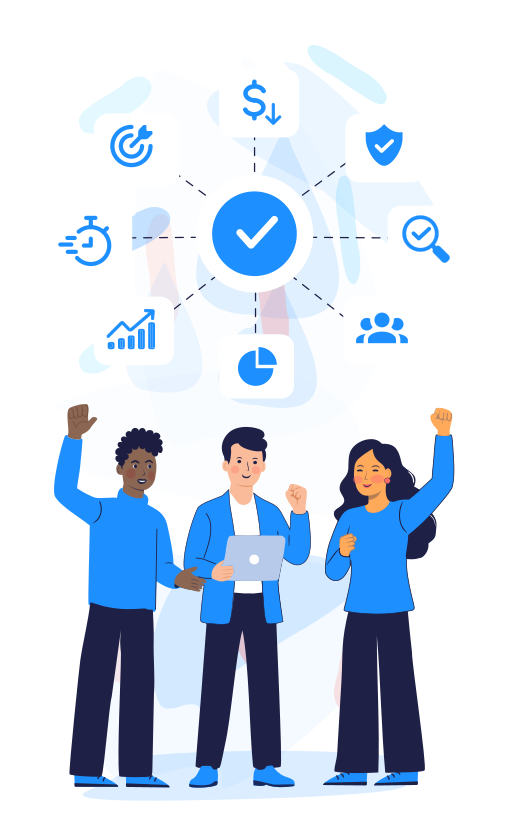
Recurring work takes less effort each time, because setup and execution no longer start from scratch.
The same logic, requirements and knowledge apply across users and repeated cases.
Teams can handle more recurring work without their effort growing at the same rate.
Successful AI-assisted work can become a shared capability of the organization instead of staying with individual employees.
An AI skill is a packaged, reusable set of instructions for one type of recurring work. It covers the inputs it needs, the steps to follow, the company knowledge to use, the output it must produce and the boundaries of its responsibility. Instead of writing a prompt and assembling context each time, a person invokes the skill and supplies the inputs it asks for. The skill then follows the proven instructions itself. Skills matter because ad hoc prompting keeps the know-how with individuals and makes results depend on who is prompting. A skill captures the execution once and makes it available to the whole team. We keep each skill as a documented, platform-independent brief and render it for the platform in use.
Claude Skills are folders of instructions, reference files and scripts that Claude loads when a task matches the skill's description. Custom GPTs are configured versions of ChatGPT with their own instructions, files and actions. Copilot agents, built in Microsoft Copilot Studio, bring the same idea to Microsoft 365 data and workflows, and Gemini Gems do the same in Google's ecosystem. They are containers for one thing: a captured way of doing a piece of work. What goes into the container decides the result. That's why we write the skill as a platform-independent brief first, with the inputs, instructions, knowledge, examples and boundaries, and then build it on the platform your team already uses. Moving a skill from one platform to another is then a mechanical step rather than a rewrite.
A producing assistant is an AI assistant configured around a larger recurring work product: a document, an analysis, a plan, a report or a formal communication. It carries the relevant business and process context, asks for the inputs it needs and produces the work product in the expected structure. The instructions it follows were proven before they were packaged. A skill covers one task, and a producing assistant covers a whole work package. The difference shows in the outcome. When a piece of work is generated against a template, with the process, the work instructions and the examples already in place, the gaps a person would otherwise close by hand are closed in advance. The result comes out at a different level of quality.
Use the platform your team already works in, as long as it meets your data and security requirements. That means Microsoft Copilot where the company runs on Microsoft 365, ChatGPT or Claude where people already use them for knowledge work, and Google Gemini, xAI Grok or an open-source platform where that fits. We support all of them, because nobody can predict which vendor will lead in which area next year, and platform costs and limits change quickly. What protects you is that the skill lives in a platform-independent brief. When the choice changes, the brief is rendered for the new platform instead of being rebuilt. We also choose models by the quality and cost of their output for your work, and a well-defined process rarely needs the most expensive model.
A skill or an assistant is enough while a person runs the workflow: they start the work, provide the inputs, review the result and decide what happens next. An agent is right when AI should own a defined piece of execution end to end. It works through its steps and systems and involves a person only to escalate or approve. The order matters. An agent built on work that was never done consistently with an assistant inherits every undefined step as a failure. That's why we bring work to the collaborative level first and prove the main flow and the edge cases. Then we convert the proven skill or assistant into a production agent, which is a short step once the definition exists.
We run it on real work before it is packaged. The process behind the skill is run several times by a person with AI support and cleaned up where the result varies. It is packaged only once it gives a consistent result of acceptable quality. The skill's instructions are written with explicit patterns, because AI gives repeatable results when the pattern is explicit and starts inventing when it isn't. They include examples of good output rather than principles alone, since AI follows a good example better than an abstract rule. They also explain why each step exists, which makes the behavior more stable across cases. The skill states its boundaries and the points where a person reviews or decides.
Good candidates are recurring work with a definable output: documents and analyses, plans and reports, reviews, standard communications, data preparation, meeting and transcript processing and the production of visuals. The work should repeat often enough that capturing it once pays back, and it should be possible to describe what a good result contains. One of the most valuable patterns is an AI-assisted review. A complex document is loaded together with the rules and good examples, and the reviewer walks through it with the assistant. The output is a review report plus a corrected version or a list of actions. It targets the scarcest resource in a company, the time of its senior people, and reduces the number of review rounds.
They need training, but not in prompt engineering. In the early stages of adoption people do learn to prompt, and results vary with that skill. Once the recurring work is packaged into skills and assistants, the need for constant prompting drops, and even people with little AI experience produce good results. What the team then needs is role-specific training on the capabilities themselves: which one to use for which work, what inputs to give, what output to expect and where their own review and judgment remain. We deliver each capability with that guidance, examples and a handover to the team. Tools alone don't change how a team works. A configured process and people trained to use it do.
Show us the tasks, analyses, documents, communications and other work your people keep creating with AI. We'll find where repeated prompting and preparation can become reusable AI execution.